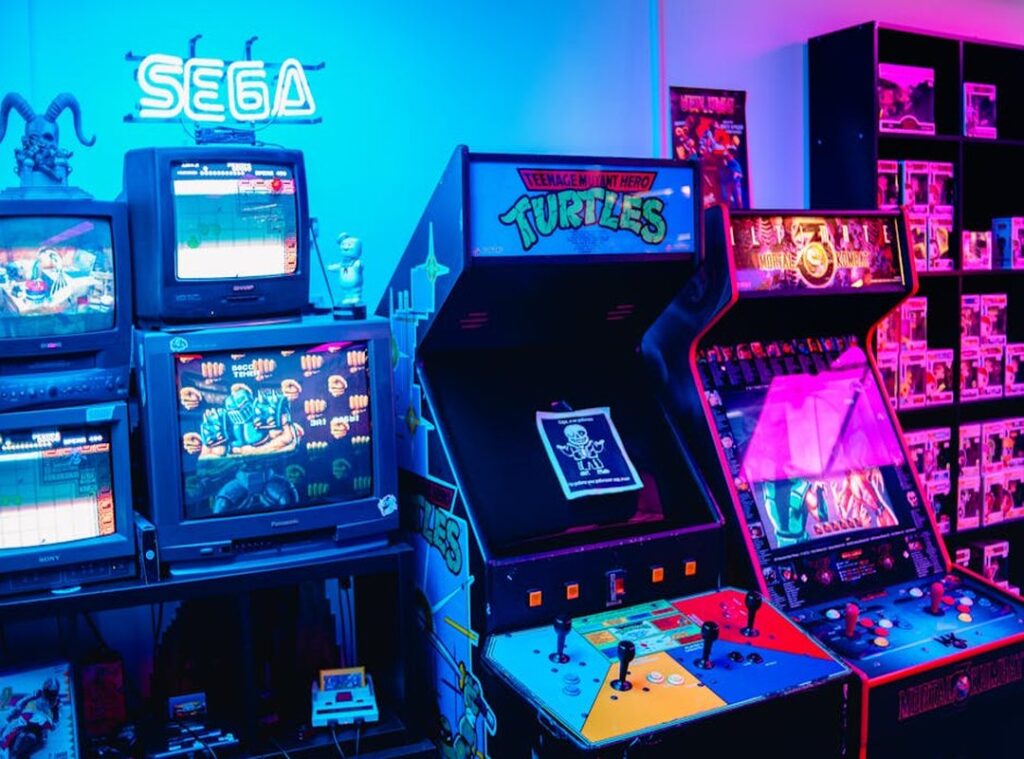
Remember that game you loved as a kid?
The one you tried to find last week and couldn’t.
It’s gone. Not just hard to find (erased.) No store page. No download.
No server left running.
I’ve watched this happen too many times. Digital games vanish faster than physical ones ever did. Corporate decisions.
Server shutdowns. Licensing hell.
That’s why Tgarchivegaming matters.
It’s not nostalgia bait. It’s infrastructure. A real library for interactive history.
Built to last.
I spent months studying what actually works in digital preservation. Not theory. Not wishful thinking.
What survives, what fails, and why.
This guide cuts through the noise. You’ll understand what a Gaming Archive Hub is. Why it’s urgent.
And how to support or use one. Starting today.
What Is a Gaming Archive Hub? (Not Your Cousin’s ROM Dump)
A Gaming Archive Hub is a preservation project. Not a download site. Not a piracy front.
It’s a place where games go to survive. Not just run.
I’ve seen too many people confuse these with shady ROM sites. Big difference. One breaks copyright.
The other fights to keep it from vanishing.
this guide is one of those real efforts. It treats games like cultural artifacts. Which they are.
Think of it like the Library of Congress (but) for Mega Drive cartridges and floppy disks. Or like a museum that doesn’t just display the final product, but also the sketches, the pitch decks, the rejected level designs.
They save source code. Manuals with coffee stains. Developer interviews recorded on crackly audio.
Box art mockups. Even failed prototypes.
That matters because context changes everything. You can’t understand EarthBound without seeing how Nintendo of America tried to bury it.
The Video Game History Foundation does this work seriously. So does the Internet Archive’s software collection. Both prioritize legality, attribution, and access under fair use.
Most ROM sites don’t even list the original copyright holder. These hubs do (and) cite it every time.
You ever try to find the manual for Star Fox 2? Good luck. Unless you know where to look.
Preservation isn’t nostalgic. It’s urgent. Games rot faster than film.
And no, emulation isn’t the goal. Context is.
Want proof? Go look at what’s actually in Tgarchivegaming. Then ask yourself: would your favorite game even exist in 50 years without this?
The Digital Black Hole: Why Gaming History Is Disappearing
I’ve watched games vanish twice now. Once when I couldn’t find Scott Pilgrim vs. The World on any store.
Again when P.T. got scrubbed from PlayStation Network like it never existed.
That’s Digital-Only Delisting (and) it’s not rare. It’s policy. A publisher pulls the plug, and poof.
No warning. No archive. Just silence where a game used to live.
You think you own it? You don’t. You rented access.
And rentals expire.
Server shutdowns hit harder than people admit. Star Wars Galaxies, Homefront: The Revolution, Battleborn (all) dead online. Not “on pause.” Gone. Unplayable.
Even if you still have the disc or download, the core experience is gone.
No servers = no game. That’s not nostalgia. That’s erasure.
Physical media isn’t safe either. Discs rot. Cartridges lose data.
Magnetic tape degrades. I held a 1992 SNES cartridge last month. The label was fine, but the ROM wouldn’t read in three different flash carts.
And nobody saved the source code. Not for half the PS2 library. Not for most early mobile games.
Not for Tetris Friends. If the original files are lost, remasters are impossible. No one can rebuild what wasn’t kept.
We treat games like disposable apps. But they’re culture. Art.
History.
So why do we wait until it’s too late?
Tgarchivegaming is one of the few places trying to pull stuff back from the edge.
I go into much more detail on this in Tgarchivegaming Technology Hacks by Thegamearchives.
Most preservation happens in basements and Discord servers. Not boardrooms.
Big studios don’t care until it’s a PR problem. By then, it’s usually too late.
I backed up my copy of Okami last week. Not because I’m sentimental. Because I’ve seen what happens when no one does.
Does your favorite game still exist anywhere besides your memory?
The Anatomy of a World-Class Gaming Archive

A world-class gaming archive isn’t just a folder full of ROMs.
It’s a time machine with receipts.
I’ve dug through dozens of archives. Some barely functional, others shockingly complete. Most fail at one thing or another.
Here’s what actually works.
Accessibility & Usability: If I can’t find Super Mario Bros. in under three clicks, it’s broken. No excuses. Search needs to handle typos.
Filters need to work. And yes (you) need keyboard navigation. (Because not everyone uses a mouse.)
Context & Curation: A game without context is just code. Who coded it? Why did it flop in Japan but explode in Brazil?
Where did that weird Easter egg come from? I want developer notes. I want magazine scans.
I want fan letters from 1989. Without this, you’re archiving files. Not culture.
Comprehensiveness: Box art matters. Manual scans matter. Even the crinkled Sears catalog page where it first appeared matters.
That’s how you feel the era. Not just play the game (inhabit) its moment.
Technical Preservation: ZIP files rot. Hard drives die. Formats vanish.
You need multiple copies. You need plain-text metadata. You need checksums.
You need backups offsite. Not someday. Now.
And here’s the hard truth: most archives skip at least two of these. They chase size over sense. They hoard ROMs but ignore the manual that explains why the jump physics felt so right.
That’s why Tgarchivegaming stands out (it) nails all four. Not perfectly, but consistently.
Tgarchivegaming Technology Hacks by Thegamearchives shows how they pull it off (especially) the metadata pipeline. I stole their folder-naming convention. It saved me six hours last month.
You don’t get trust by uploading more files.
You earn it by making every file mean something.
Start there.
Everything else follows.
How to Actually Help Save Old Games
I used to think preservation meant waiting for someone else to fix it. Then I found a crumbling copy of EarthBound in a thrift store. No manual.
No box. Just the cartridge and a weird smell.
That’s when I started looking up Tgarchivegaming.
It’s not magic. It’s people scanning boxes, typing in menu text, recording boot screens (all) so future players don’t hit a dead end.
You don’t need to code. You don’t need a lab. Just your eyes, your time, and maybe that dusty shelf in your garage.
Start with the Internet Archive’s software collection. Search for your favorite 90s game. See what’s missing?
That’s your opening.
The Video Game History Foundation is legit. So is the Strong National Museum of Play. Both accept scans, notes, even old receipts (yes, really).
Scan a manual. Transcribe a walkthrough. Record how a game boots on original hardware.
All of it counts.
And if you own digital games? Speak up about the right to repair. Why should a $60 purchase vanish because a server shuts down?
(Pro Tip: Start small. Find the entry for your favorite childhood game on a preservation site and see what’s missing. Maybe you have the manual in your attic!)
Ownership isn’t just about buying. It’s about keeping things alive. Even if all you do is upload one PDF.
That’s enough.
Do it.
Gaming History Won’t Save Itself
I’ve watched classics vanish. Servers shut down. Manuals get tossed.
Art gets erased.
That’s not normal. That’s a failure.
Our shared gaming culture is fragile. Not because it’s weak. But because nobody’s guarding the door.
Tgarchivegaming is that door.
It’s not a museum. It’s a working archive. A place where ROMs, scans, code, and stories live (backed) up, tagged, and kept alive by people who care.
You remember that game you played at 12. The one with the weird ending. The one no store sells anymore.
What happens if nobody saves it?
Nothing. Unless you do.
Your gaming history is worth saving.
Explore an archive today. Share this article. Join the movement.
Right now. Before the next title goes dark.