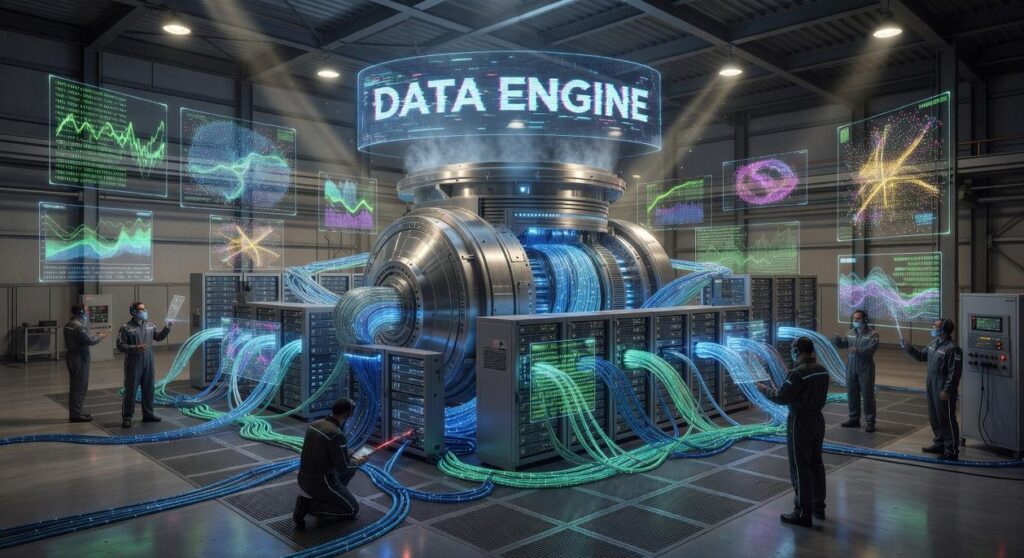
If you’re exploring modern data platforms, you’re likely trying to understand how today’s data infrastructure actually works — and which technologies are worth your attention. With new tools, architectures, and machine learning frameworks emerging at a rapid pace, it’s easy to feel overwhelmed by competing claims and constant innovation.
This article cuts through that noise. We break down the core components of modern data ecosystems, explain how emerging software platforms fit together, and highlight practical system optimization strategies that make a measurable difference. Whether you’re evaluating tools, refining your architecture, or building data-driven applications, you’ll find clear, actionable insights aligned with what you’re searching for.
Our analysis is grounded in hands-on evaluation of real-world tech stacks, continuous monitoring of platform evolution, and direct review of performance benchmarks across environments. The goal is simple: give you a concise, technically sound overview so you can make smarter decisions with confidence.
Navigating the Modern Data Ecosystem
Businesses in hubs like Silicon Valley and Bengaluru talk about data as the new oil (a cliché, but useful). Yet pipelines stall when raw logs from Kafka streams never reach downstream analytics.
At its core, a modern stack includes:
- scalable storage like lakehouses
- distributed processing engines such as Spark
- orchestration and observability layers
Skeptics argue legacy warehouses are enough. For some regulated sectors—think Frankfurt’s fintech corridor—that’s fair. But without modern data platforms, real-time personalization or ML-driven forecasting remains theoretical.
Pro tip: design for latency budgets, not just capacity and governance.
The New Foundation: Unifying Data Storage
Data architecture used to feel like choosing between two worlds. On one side, Data Warehouses—systems optimized for structured data and business intelligence (BI), meaning dashboards, reports, and SQL queries. On the other, Data Lakes—massive repositories for raw, unstructured data like logs, images, and JSON files.
The Lakehouse Architecture
The Lakehouse blends both. It keeps the low-cost flexibility of a lake while adding the performance and governance of a warehouse. Platforms like Snowflake and Databricks make this convergence practical, allowing teams to run analytics and machine learning on the same underlying data.
Some argue warehouses alone are enough—after all, they’re fast and reliable. But they struggle with unstructured data and scale costs. Others prefer pure lakes for flexibility, yet lakes without structure can become “data swamps” (and nobody wants to swim there). The lakehouse approach clarifies the trade-off: unify storage, then layer intelligence on top.
Object Storage as the Default
Object storage systems like Amazon S3 and Google Cloud Storage have quietly become the foundation. They store data as discrete objects instead of rows or blocks, making them cheap, scalable, and ideal for diverse workloads. That’s why many modern data platforms treat object storage as the base layer.
The Rise of Specialized Databases
Not all data fits neatly into SQL tables. Consider:
- Vector databases (e.g., Pinecone) for AI embeddings and semantic search.
- Time-series databases (e.g., InfluxDB) for IoT metrics and monitoring.
These purpose-built systems exist because general databases can’t efficiently handle every pattern (a Swiss Army knife isn’t always the best screwdriver). Clarifying the role of each layer helps teams design smarter, scalable architectures.
The Engine Room: Real-Time Data Processing and Transformation

A decade ago, ETL—Extract, Transform, Load—was the gold standard. Data was cleaned before it ever touched the warehouse. But around 2016, as cloud storage costs dropped and compute became elastic, ELT (Extract, Load, Transform) took over. Instead of shaping data upfront, teams now load raw data directly into the warehouse and transform it there. The shift wasn’t just technical; it was philosophical.
From ETL to ELT: Why the Shift Happened
ELT thrives because warehouses today are powerful enough to handle transformations internally. Tools like dbt (Data Build Tool) orchestrate SQL-based transformations inside the warehouse itself, turning raw tables into analytics-ready models. Some critics argue ELT creates “data swamps” filled with unstructured chaos. That risk is real—without governance, raw data piles up fast. But with version control, testing, and documentation baked into workflows, ELT offers agility ETL simply can’t match.
This evolution mirrors the rise of modern data platforms, where storage and compute scale independently (a game changer after years of hardware bottlenecks).
Batch vs. Stream Processing
Batch processing frameworks like Apache Spark excel at large-scale analytical workloads—think quarterly revenue modeling or retraining a recommendation engine. In contrast, stream processing tools such as Apache Kafka and Apache Flink handle continuous data flows in real time.
Skeptics say real-time systems are overkill for most businesses. Sometimes they’re right. Not every dashboard needs millisecond updates. But for fraud detection—where delays cost millions—or live inventory systems preventing overselling, streaming is indispensable.
Practical applications abound: banks flag suspicious transactions instantly, retailers adjust stock counts dynamically, and streaming platforms personalize content mid-session (yes, that “perfect” suggestion wasn’t random). For more on architectural evolution, see the growth of headless cms in omnichannel experiences.
Pro tip: Pilot streaming in one high-impact workflow before scaling. Three months of focused testing often reveals whether real-time complexity truly delivers ROI.
Activating Insights: Analytics and Machine Learning Frameworks
Democratizing Analytics with BI
Modern Business Intelligence tools like Tableau, Power BI, and Looker have transformed analytics from a specialist function into a company-wide capability. Gartner reports that over 65% of analytics now occur through self-service BI platforms rather than centralized data teams. These tools connect directly to the modern data stack, allowing business users to explore dashboards, run queries, and generate reports without writing SQL. In practice, that means a sales manager can spot churn patterns in minutes instead of waiting weeks (no more spreadsheet archaeology).
• Faster insight cycles
• Reduced dependency on engineering
• Broader data literacy across teams
Integrating Machine Learning
Frameworks like TensorFlow and PyTorch dominate production ML, powering everything from Netflix recommendations to medical imaging diagnostics. According to the 2024 Stack Overflow Developer Survey, PyTorch and TensorFlow remain two of the most used ML libraries globally. Their flexibility enables teams to prototype quickly and scale models efficiently.
The Emergence of MLOps
MLOps (Machine Learning Operations) formalizes the lifecycle of ML systems—training, deployment, monitoring, and retraining. McKinsey estimates that fewer than 50% of ML models make it to production without structured operational practices. With modern data platforms, automated monitoring detects model drift early (because even smart models forget). Pro tip: treat models like products, not experiments.
System optimization hinges on governance and observability. First, know your data. A data catalog is a centralized inventory that documents what data exists, where it originated, and how it’s used. With clear lineage—the traceable path from source to dashboard—teams prevent duplicate metrics and compliance risks. Next, adopt data observability, an emerging practice that goes beyond basic monitoring to diagnose pipeline failures, schema drift, and freshness gaps. To optimize, follow: 1. Implement automated lineage tracking. 2. Set health SLAs for datasets. 3. Integrate alerts across modern data platforms. Finally, review diagnostics weekly and refine ownership so accountability stays clear.
A future-proof data strategy rests on three principles: modular architecture, scalability, and support for analytical and operational workloads. Yet the hurdle is integration. Disconnected tools create latency, governance gaps, and brittle pipelines (and no one wants a 2 a.m. failure).
Evaluate your stack against modern data platforms and ask:
| Area | Key Question |
| Real-time | Can you process streaming data instantly? |
| Governance | Are policies automated and auditable? |
| ML | Is model deployment built into pipelines? |
Pro tip: prioritize interoperability before adding new tools. Small integration fixes often unlock outsized performance gains.
Turning Insight Into Action With Modern Data Strategy
You came here to understand how today’s data ecosystem is evolving — from intelligent pipelines to scalable architectures and the rise of modern data platforms. Now you have a clearer picture of how these technologies connect, why they matter, and how they can transform raw information into strategic advantage.
But knowing the landscape isn’t enough. The real challenge is keeping up as tools evolve, systems scale, and performance demands increase. Falling behind doesn’t just slow innovation — it creates inefficiencies, missed insights, and costly technical debt.
The next step is simple: stay plugged into reliable, up-to-date tech insights and actionable optimization strategies. Explore deeper breakdowns of emerging software platforms, machine learning frameworks, and performance best practices so you can build smarter, faster, and more resilient systems.
If you’re serious about leveraging modern data platforms without the confusion and overwhelm, start implementing these insights today and continue learning from trusted, expert-driven tech coverage. The sooner you optimize your stack, the faster you unlock measurable results.